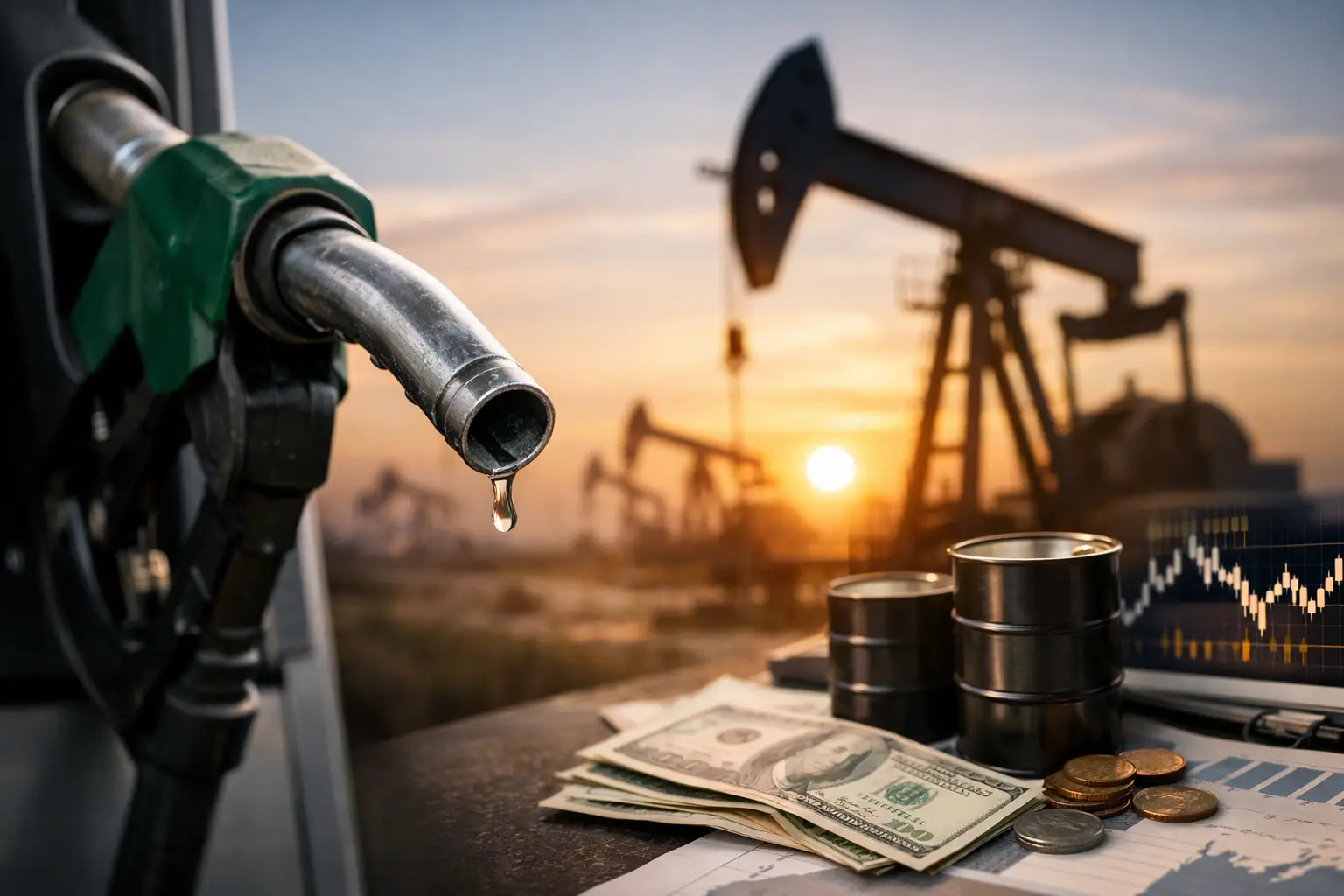
When petrol jumps 20 or 30 cents a litre in a short stretch, most households feel it immediately at the bowser. But asking why this oil crisis isn't just about petrol prices? gets to the real issue. For Australian borrowers, investors and business owners, oil shocks rarely stay confined to transport costs. They work their way through inflation, business margins, consumer confidence and, eventually, the cost and availability of finance.
That matters because major financial decisions are rarely made in isolation. A household weighing up a home loan refinance, an investor reviewing rental yield, or a business owner planning equipment finance is not just responding to one higher weekly fuel bill. They are responding to a broader shift in economic pressure.
Why this oil crisis isn't just about petrol prices
Oil is a core input across the economy. Petrol is simply the most visible place where consumers notice it. The less visible impact sits behind freight, construction, manufacturing, aviation, agriculture and logistics. When energy costs rise sharply, businesses face an immediate question - absorb the hit, or pass it on.
Some firms can protect margins for a while. Others cannot. Transport operators, tradies, food distributors and regional businesses often feel the squeeze first because fuel is a direct operating expense. Once those costs flow through supply chains, the price of goods and services starts to lift more broadly. That is when an oil crisis becomes an inflation story rather than just a fuel story.
For borrowers, that distinction is critical. Inflation affects repayment capacity, lender policy settings and the broader rates outlook. So while the petrol receipt is the obvious pain point, the financial consequences usually run much deeper.
The inflation link is where households really feel it
Higher oil prices can push inflation up in two ways. The first is direct: fuel itself becomes more expensive. The second is indirect: nearly everything that needs to be moved, built, heated or produced becomes dearer as well.
In Australia, that can show up in supermarket pricing, courier costs, airfares, building materials and service charges. It does not always happen evenly, and not every price rise can be pinned on oil alone. Labour costs, currency movements and supply constraints all play a role. Still, energy is one of those inputs that spreads widely and quickly.
For owner-occupiers, that means household cash flow gets hit from multiple directions at once. Mortgage repayments may stay unchanged in the short term, but everyday spending rises. That reduces buffer capacity. A family that looked comfortable on paper six months ago may now have less room to absorb future rate increases, school fees or unexpected expenses.
For investors, the issue is more nuanced. Rental demand may remain strong, but higher holding costs, insurance, strata, maintenance and general living expenses can still weaken net returns. If inflation persists and rates stay elevated for longer, the pressure shifts from income growth to debt servicing discipline.
Interest rates may not rise because of oil alone, but oil can keep them higher
One of the biggest reasons this matters financially is the Reserve Bank response to inflation. Central banks do not set policy based on petrol prices alone. They look at broader inflation trends, inflation expectations, labour market conditions and economic resilience.
That said, a sustained oil shock can complicate the path lower for rates. If energy costs help keep inflation sticky, the case for early or aggressive rate cuts weakens. For borrowers hoping for relief, that changes planning assumptions.
This is where strategy matters more than headlines. If rates stay higher for longer, the wrong lending structure becomes expensive. Variable borrowers may want flexibility but need to understand repayment sensitivity. Fixed borrowers may gain certainty, though timing and break costs still matter. Investors may need to reassess portfolio leverage, interest-only periods or cash reserves.
The right move depends on the borrower. A first-home buyer with tight serviceability needs a different approach from a business owner with fluctuating cash flow or an investor balancing several properties. There is no universal solution, only better structuring.
Why businesses feel an oil crisis before consumers fully see it
Business owners often experience oil-driven pressure earlier than households because they carry direct cost exposure and contractual risk. A transport-heavy business, for example, may face higher fuel, higher supplier charges and delayed payment cycles all at once. If customer contracts cannot be repriced quickly, margin compression becomes immediate.
That can affect finance decisions in practical ways. Some businesses delay expansion. Others reconsider vehicle or equipment purchases. Some draw more heavily on working capital or seek to refinance existing debt to preserve liquidity.
Commercial borrowers should pay particular attention to how temporary cost spikes interact with long-term debt commitments. Taking on new finance in a volatile cost environment is not necessarily the wrong move. In some cases, investment improves efficiency and reduces operating costs over time. But the debt structure needs to reflect the business cycle, not just the purchase price.
This is especially true in sectors like construction, agriculture, logistics and trade services, where fuel and transport costs can materially alter project viability.
Property markets are affected too, just not always in obvious ways
At first glance, oil and property can seem only loosely connected. In reality, energy shocks can affect property through rates, confidence, construction costs and location preferences.
If building materials and freight become more expensive, development margins tighten. Smaller projects may be delayed, repriced or shelved. That can constrain supply in some markets, which may support prices in established housing. But it can also reduce developer appetite and increase finance complexity, especially where feasibility is already thin.
For owner-occupiers, commuting costs can change how buyers think about location. Suburbs that rely heavily on long car travel may become less attractive at the margin when petrol remains expensive. Areas with stronger transport links or closer employment access may hold appeal better. This does not cause an overnight shift, but it can influence buyer behaviour over time.
For investors, the takeaway is not to make simplistic calls based on one macro factor. It is to stress-test assumptions. Will the property still work if rates stay elevated, fuel-driven inflation lingers and tenant affordability comes under pressure? Strong assets usually survive tougher conditions. Weak structures get exposed.
Why this oil crisis isn't just about petrol prices for borrowers
Borrowers often focus on interest rate comparison first, which is understandable. But during periods of economic pressure, structure matters as much as price. A competitive rate helps, yet it does not solve for poor cash flow management, limited buffers or an inflexible loan setup.
An oil shock is a reminder to review the broader lending position. That may include offset balances, redraw access, split loan design, repayment type, debt consolidation opportunities or whether existing facilities still match current goals. For business borrowers, it may also mean checking covenant pressure, working capital capacity and asset finance timing.
This is where strategic advice can be more valuable than a narrow product comparison. The right lending decision is not always the cheapest headline rate. It is the structure that remains workable if inflation stays sticky, expenses rise further or income becomes less predictable.
What Australians can do instead of reacting to every headline
The worst time to assess your financial resilience is after pressure has already built. A better approach is to model scenarios early. If petrol, groceries and utilities stay elevated for another six to twelve months, what does that do to monthly surplus cash? If rates do not fall as quickly as expected, does your current lending position still hold up?
For households, this may mean tightening discretionary spending and rebuilding cash buffers before taking on new debt. For investors, it may mean reviewing portfolio performance line by line rather than assuming all property will carry itself. For business owners, it may mean separating short-term cost volatility from long-term funding strategy.
There is also a behavioural trap worth avoiding. Short-term crises tend to push people into purely defensive decisions. Sometimes caution is warranted. Sometimes it leads borrowers to miss refinancing opportunities, better structures or well-timed acquisitions. Good decisions in uncertain markets come from testing assumptions, not guessing where the next petrol cycle lands.
At The Finance Office, this is exactly why finance should be approached as a strategic decision rather than a one-off transaction. When costs are moving across the economy, borrowers need lending structures that can handle pressure as well as opportunity.
The key point is simple: petrol prices are just the first signal. The more important question is what higher energy costs do to inflation, rates, serviceability and long-term financial plans. If you treat an oil crisis as only a weekly fuel-budget problem, you risk missing the larger decisions that matter far more.